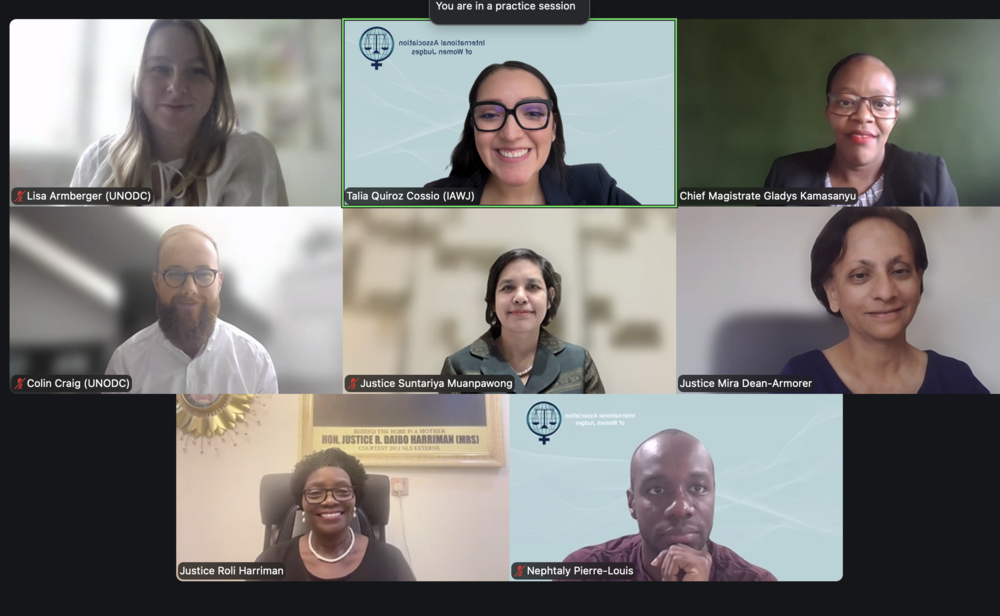
 "We do not inherit the earth from our ancestors. We have actually borrowed it from our children," said Justice Roli Daibo Harriman. This statement summarizes the focus of the webinar hosted by the International Association of Women Judges (IAWJ) and the United Nations Office on Drugs and Crime (UNODC). The event explored how environmental damage is becoming a form of organized crime and discussed the legal tools needed to address it.
The session featured several intergovernmental legal experts. Colleen Craig from the UNODC led discussions on legislative guides and international frameworks. Lisa Armburger, also from the UNODC, demonstrated the Sherloc knowledge management portal. The panel of judges brought perspectives from four diverse jurisdictions:
• Justice Sundariya Mwambawong of the Court of Appeal of Thailand, an expert in environmental legislation.
• Justice Dean Armorer of the Court of Appeal of Trinidad and Tobago, who specializes in environmental and quarrying law.
• Justice R. Daibo Harriman of the High Court of Delta State, Nigeria, a leader in judicial reform and environmental justice.
• Magistrate Gladys Kamasanyu, who heads the Uganda Wildlife Court and has extensive experience in environmental case adjudication.
Introduction
For a long time, the legal community viewed environmental harm as a minor regulatory issue rather than a criminal matter. Many lawyers considered these offenses to be technical violations, often treating them as petty infractions. However, this outdated perspective fails to account for the increasing scale and complexity of these activities. Environmental crime now frequently involves sophisticated criminal networks that operate across borders to exploit natural resources. Because these activities cause significant damage to public health, biodiversity, and the rule of law, they should no longer be treated as administrative problems. Instead, they must be recognized and addressed as serious criminal offenses that threaten human safety and future stability.
The work of the Open-Ended Intergovernmental Expert Group on Crimes that Affect the Environment is central to this effort. This group assessed how current laws are used and identified gaps in the international legal framework. The international legal framework consists of:
1. Agreements focused on environmental and ocean-related instruments.
2. Treaties focused on criminal law, such as the Organized Crime Convention and the Convention Against Corruption.
3.Regional legal instruments that are specifically designed to address environmental offenses.
Sherloc management portal
To support judges and policymakers, the UNODC created the Sherloc knowledge management portal. This platform is a database that provides legal information on crime and criminal justice issues. It provides access to over 20,000 legal resources. It helps users find legislation, case law, and international treaties. It is useful for judges in countries where it is difficult to find case law or where local legal resources are not publicly available.
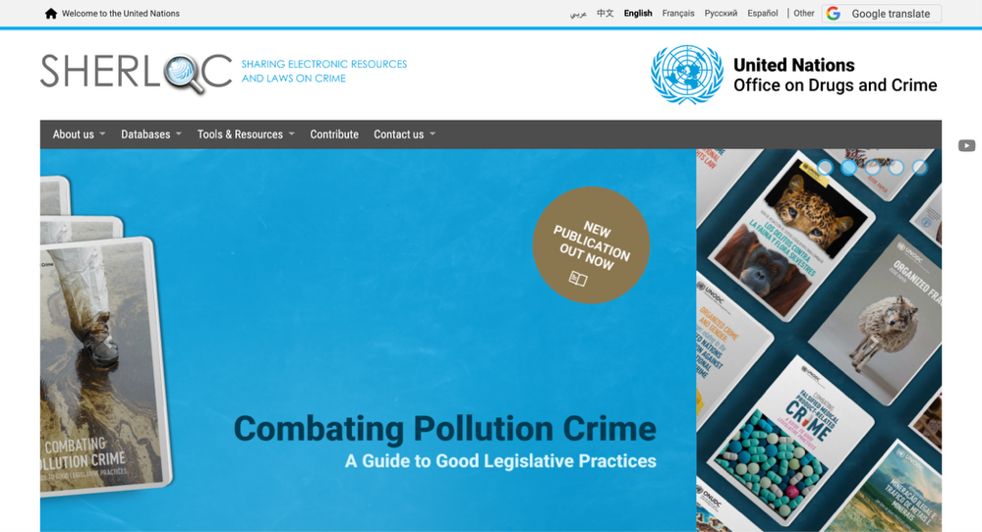
Sherloc is designed for a wide range of professionals. Its primary users include judges, prosecutors, law enforcement officers, government officials, academics, and students. Most of the database is free to access, and users do not need to register to view the documents. Users can visit the Sherloc website to search for documents. The portal allows users to filter information by country, crime type, or specific legal issues. For instance, a user can look for cases that involve confiscation measures or international cooperation. The portal is multilingual and allows users to search in all six official United Nations languages. It also offers translation options for different texts.
While the Sherloc portal provides the necessary resources to support legal research, the true value of these tools lies in their practical application. To understand how these legal frameworks operate in reality, it is important to examine the specific challenges faced by different jurisdictions.
Regional Challenges and National Case Studies
Thailand
In Thailand, judges face complex pollution and illegal mining cases involving networks of international and domestic investors. Thailand is actively changing how it handles environmental crimes by shifting away from the view that these are just minor, technical issues and instead treating them as serious, organized criminal activities. To support this, Thai judges are participating in specialized training programs and "green bench" initiatives that allow them to prioritize environmental cases. They are also taking a hands-on approach by visiting local communities and sites affected by pollution and illegal mining to see the damage firsthand.
In a push for stronger deterrence, Thai officials are exploring a range of stricter penalties. These measures range from the potential consideration of capital punishment for the most severe offenses to imposing extreme financial penalties, including forcing polluters to pay damages until they face bankruptcy. Furthermore, Thailand is working to develop clearer sentencing guidelines and is seeking more collaboration with international organizations, such as Interpol and the UN, to better track and prosecute complex cross-border crimes like waste trafficking and illegal mineral mining.
Caribbean
Turning to the Caribbean, nations are treating illegal quarrying—the unauthorized extraction of stone, sand, and gravel—as a serious environmental and organized crime. In Trinidad and Tobago, the law now mandates that quarrying is permitted only if operators obtain the necessary licenses and complete strict environmental impact assessments. Failure to comply can lead to company closures, prosecutions, and mandatory remediation. To enforce these rules, authorities frequently conduct raids to shut down illegal operations.
Similarly, Guyana relies on its mineral and environmental protection acts to regulate the industry, often executing joint operations between mining commissions and the police to arrest illegal operators and seize their machinery. Jamaica takes a distinct approach by utilizing its constitution to protect the right to a clean environment. In a landmark 2026 case, the courts ruled that government decisions regarding environmental permits must successfully balance economic development with the constitutional need for environmental safety, setting a strong legal precedent for the entire region.
Nigeria
Nigeria faces a difficult struggle in the Niger Delta. The country relies on the oil industry for money, but this activity often conflicts with the needs of local communities that depend on the water for fishing and health. Illegal fishing steals food sources and harms marine life, while toxic waste dumping poisons the rivers and land. To address this, Nigerian judges now use constitutional interpretation to protect human rights, such as the right to a livelihood and public health. Judges also use specific laws against the import and dumping of hazardous waste to hold companies accountable.
To handle these complex cases, judges are undergoing training to better understand scientific evidence, such as satellite data and vessel tracking technology. The main dilemma for the country is trying to support the oil industry for economic growth while also protecting the natural environment that local families need to survive. Justice Harriman explains why this struggle is so important by noting that environmental justice is at its core about human justice.
Uganda
Finally, in Uganda, wildlife crime is a significant issue. The country serves as both a source and a major transit route for illegal wildlife products, most notably pangolin scales and elephant ivory. To combat this, Uganda established the Uganda Wildlife Court in 2017. As the only specialized court of its kind in Africa, it prioritizes wildlife and environmental cases to ensure they are handled quickly and consistently. By separating these cases from the standard court docket, Uganda has successfully processed over 2,500 cases, reducing legal delays and ensuring that offenders face prompt justice.
To support these legal efforts, Uganda uses advanced scientific technology. The Wildlife Timber Forensics Laboratory uses DNA analysis to identify seized items and link them directly to suspects and crime scenes. This evidence helps prosecutors build stronger cases for conviction. Additionally, the 2019 Wildlife Act provides a strong legal foundation by introducing strict penalties, including the possibility of life imprisonment for crimes involving protected species. These interventions have improved coordination among law enforcement agencies and demonstrated a firm commitment to dismantling criminal networks.
Conclusion
Overall, the judiciary holds an important role in protecting our environment. We must stop treating environmental offenses as minor issues and start addressing them as serious crimes that harm people and safety. Success requires specialized courts, updated legal tools, and international cooperation. We encourage all legal professionals to use the Sherloc portal to access resources and share strategies. Please take action in your own region by advocating for stronger enforcement and better training. Our collective effort is essential to protect the planet for the children who will inherit it.